Saturday, November 24, 2012
Childhood Connections to Play
First, a few quotes about the importance of play
In our play we reveal what kind of people we are.
Ovid
Roman poet
43 BC–17 or 18 AD
http://www.thestrong.org/about-play/play-quotes
“We don’t stop playing because we grow old; we grow old because we stop playing.”
George Bernard Shaw
http://planningwithkids.com/2009/04/14/10-quotes-on-the-importance-of-play/
When we stop playing, we stop experiencing life. Playing is practicing life.
A child loves his play, not because it’s easy, but because it’s hard.
Benjamin Spock
American pediatrician
1903–1998
http://www.thestrong.org/about-play/play-quotes
Especially at a young age, it’s hard not to have your feelings hurt when playing with others. Playing is hard because it involves the discovery of unknown; discovering who one is through feelings that emerge from playing with others. Children seek the company of others because they instinctively know that it is through others’ eyes they will see a reflection of who they are. Conversely, Chomsky’s theory on language development in children proposes children’s innate ability to learn a language.
Human beings need pleasure the way they need vitamins.
Lionel Tiger
Contemporary Canadian anthropologist
http://www.thestrong.org/about-play/play-quotes
A society where pleasure only retains its sexual application, forgets that pleasure is the result of the communion of body and soul. This communion creates a sense of belonging to the universe and gives purpose to life.
I believe that those boys who take part in rough, hard play outside of school will not find any need for horse-play in school.
Theodore Roosevelt
American president
1858–1919
http://www.thestrong.org/about-play/play-quotes
A hush society where children are expected to behave like adults at home and at school like grown-ups, forgets that one must explore all aspects of the personality. Since Theodore Roosevelt’s time, children’s life changed a lot. Cities and society need to provide recreational spaces for children to play, more parks with jungle gyms, more gyms for kids, more sports opportunities, more affordable after school high quality day care centers, etc.
Three essential play items for my younger self
Imagination/Enjoying being with oneself
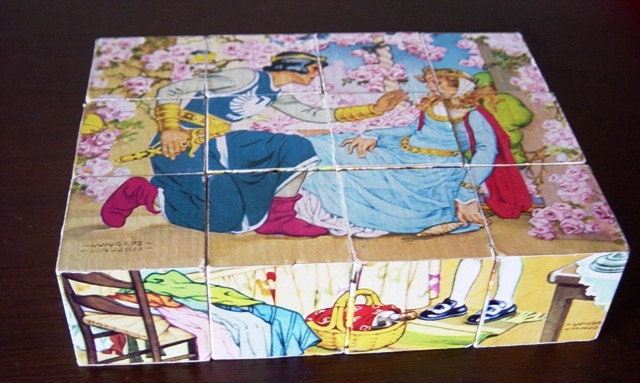
This cube puzzle is a must because I spent hours dreaming on each picture of each cube and making my own stories of the movies that I had never seen.
Freedom/Feeling independent and in control
This is freedom on the move!
Self-Taught Hunter! Learning about and respecting nature
Food is bountiful in the yard and in nature.
Parks, gardens, and yards are places where children can experience Mother Nature, and learn how resilient, interesting and yummy life can be.
People who supported me
At about 4 years of age, I enjoyed imitating old people. There is one photo where I am walking half bent over a stick, wearing a scarf, and glowing from the enjoyment of making people laugh. In fact, my mother also on the photo is watching me and someone else was taking the picture. My mother is the one who supported me throughout my childhood in play as well as academics. She also was playful and I learned from her to take joy out of anything that life brought. I remember one very special evening where my mother desperately tried every strategy to make me understand some calculation. As I started seeing the humor and feeling the embarrassment of being so stubborn in the instant, laughter got hold of me and enraged my mom. The more she became enraged, the more I laughed. We both remembered the absurdity of the situation and had a good laugh whenever we reminisced about it. I think we were able to change a potential confrontation in play time where both of us understood that the time spent together, bonding, was the gift of the moment.
In high school, my mother also supported my joining the after school drama program. Dealing with his own preconceived ideas, my father could not encourage me at first. Through theater plays, I explored personalities that contributed shaping the woman I became.
Allowing life to express itself through play is showing unconditional love.
Is play different today than it was before?
When I remember the hours spent with my cube puzzle and how this supposedly idle time developed my imagination, I wish I had been more skilled at communicating this feeling to my high school students who had difficulty creating an imaginary scene. Of course, times have changed, entertainment is readily available, and pretending that this temptation does not exist would be foolish. However, creating time and space (don’t they go together?) where children can figure out what to do is an amazing gift to them. Surely, the famous phrase “I’m bored” will be uttered, but soon enough children will be engaged in an activity of their own creation. Because they will have tapped into their own resources, children will have strengthened their self-esteem, feel proud, and have gained a sense of autonomy.
Role of play through childhood and adulthood
Play is an integral part of my day. Playing brings me laughter and harmony with my surroundings. A day without laughing or playing is a day lost to feeling in sync with the universe. Customarily, light hearted people are seen as shallow yet I am wondering if there is any truth to the other popular thought that clowns are deep thinkers .
Saturday, November 10, 2012
Relationship Reflection
"Human relationships, and the effects of relationships on relationships, are the building blocks of healthy development" (Shonkoff & Phillips, 2000, p. 4)
Just in time to prevent a marriage disaster, I attended a workshop focusing on childhood and relationships. One of the assignments required calling three people who had positively impacted my life and three people whose relationships had been negative and painful. Of these three painful relationships, I had to identify the hurt and understand the reason I allowed the hurt to occur because somewhere in the relationship would lie some medicine that could bring growth to my life. In addition, the mentor also requested that I thank these people with whom I had entertained these unkind relationships, or when it came to my brother in law I had to say “I love you”. Firmly decided to carry through with this assignment, I came back home for lunch one day to have a chance to catch my brother in law who lived in Cameroun at the time. Unexpectedly, he picked up the phone in turn surprised to hear my voice. I briefly informed him of the workshop and that I had something to tell him about our relationship. Interrupting me before I could explain exactly the purpose of my phone call, he said with his usual sarcastic demonstrations of love, or so it feels to me, “I love you too, silly”. In disbelief but alleviated from the burden of having to scorch my lips with the words I LOVE YOU to my brother in law, I considered that the universe had come to my rescue and that it was alright to vicariously complete my assignment through his words.
In the relationship described above, I learned that the pain and discomfort endured since the age of ten years old came from my inability and lack of help to sort out my feelings and emotions. Still to this day, it takes tremendous efforts to rise above feelings and emotions. Although now, feelings and emotions are consciously explored and redirected to positively affect my life. Chiefly, the scar left by this open wound pointed out that adults, parents, caregivers and teachers need to pay close attention to children’s feelings, encourage them to express their feelings, and together explore them.
On the other hand, some parents think that sheltering their children from any negative outcomes will promote self-esteem and strong personalities. In this case, it is teachers’ duty to tactfully teach both parents and children that feelings are a person’s building blocks that need examination and comprehension much like construction workers make sure that the material they use will withstand inclement weather conditions (Shonkoff & Phillips, 200).
Thanks to feedback provided by others, one can understand who they are and shape their personality. Through play, children express their understanding of how society works, experiment with personas, and little by little shape the person that they want to become. Through relationships, they learn to trust themselves and trust others.
Similarly, books offer myriads of possible relationships and connections that can bring lifelong support and/or transformative. Everyone remembers the fox in The Little Prince by Antoine de Saint-Exupéry who gave the young boy the recipe on how to develop friendship.
Most importantly, I am deeply engaged in relationships with my husband and my daughter. Even though these relationships have been built over a long period of time, they require “Tender Loving Care” because they have become rich and we all hope that we have learned from past mistakes.
When our daughter entered her teenage years, my husband and I differently perceived how we could help her. Tensions started to build between the two of us and divorce was looming in the horizon. Our relationship was saved because we both decided to work on our very relationship as its own entity. Since then, we have supported each other in fulfilling our lives. In other terms, we outgrew our childhood and started to relate as respectful adults. This relationship brings me trust, support, love and care.
Sunday, August 19, 2012
Thank You Dr. Myers
Dear Dr. Myers,
The class on early childhood development has changed my assumptions on language acquisition and communication. I am very grateful for these insights on development, in disbelief on how narrow minded I was before taking this course!
Thank you for your class and words of encouragements!
MarieFrance
The class on early childhood development has changed my assumptions on language acquisition and communication. I am very grateful for these insights on development, in disbelief on how narrow minded I was before taking this course!
Thank you for your class and words of encouragements!
MarieFrance
Thank You!
Dear Colleagues,
Reflecting with you on childhood’s sensitive issues has been comforting and, thanks to your shared expertise, I feel a lot closer to early childhood needs.
Reading your posts and responding to your questions has been a growing experience. Studying for the master in early childhood has somehow propelled me on a therapeutic introspection. I greatly appreciated the support you offered in sharing your personal life events.
As my daughter is getting married in October, I postponed the next class to November and I will probably join another group.
To All, A Big Thank You, A Big Hug
Good Luck!
Marie
Reflecting with you on childhood’s sensitive issues has been comforting and, thanks to your shared expertise, I feel a lot closer to early childhood needs.
Reading your posts and responding to your questions has been a growing experience. Studying for the master in early childhood has somehow propelled me on a therapeutic introspection. I greatly appreciated the support you offered in sharing your personal life events.
As my daughter is getting married in October, I postponed the next class to November and I will probably join another group.
To All, A Big Thank You, A Big Hug
Good Luck!
Marie
Thursday, August 16, 2012
Child development - Looking for ways to communicate and play
Professionals in the field of education must keep in mind that all children are different and that it is every educator’s challenge to celebrate their differences. Too often, educators and caregivers are caught in convenient generalizations, labeling children’s behavior and progress with scientific words instead of first describing the situation and later offering a diagnostic.
“I can remember the frustration of not being able to talk. I knew what I wanted to say, but I could not get the words out, so I would just scream”. Temple Grandin
Educators and caregivers must remember that anger and “bad” behavior indicate issues that have not been verbalized. Would signing the language a palliative to inhibited verbal expression?
I have become a big fan of sign language since I learned that non hearing infants can communicate their feelings through signing the language much earlier than their speaking peers.
“Men should learn to live with the same seriousness with which children play.” Nietzsche
I love Nietzsche’s approach to life because it feels like abstract art: the artist decomposes and offers the individual’s mind to make sense of the painting by putting pieces together in their own way. Each one must find the answer or own interpretation of the writing or the painting.
“Play is the highest form of research.” Albert Einstein
Dr. Gopnik emphasized the importance of play and offered to explore computer programs, saying that good programs provide an exploration time and also an exploitation time such as those found in play. Adults are competent in exploitation but no longer in exploration. Einstein compounds these two ideas with the term research where the scientist explores a hypothesis until they can exploit one experiment and turn it into a theory.
References
http://www.great-quotes.com/quotes/author/Temple/Grandin?full_site=0
http://www.childsplaymagazine.com/Quotes/index.htm
http://www.goodreads.com/quotes/286612-play-is-the-highest-form-of-research
“I can remember the frustration of not being able to talk. I knew what I wanted to say, but I could not get the words out, so I would just scream”. Temple Grandin
Educators and caregivers must remember that anger and “bad” behavior indicate issues that have not been verbalized. Would signing the language a palliative to inhibited verbal expression?
I have become a big fan of sign language since I learned that non hearing infants can communicate their feelings through signing the language much earlier than their speaking peers.
“Men should learn to live with the same seriousness with which children play.” Nietzsche
I love Nietzsche’s approach to life because it feels like abstract art: the artist decomposes and offers the individual’s mind to make sense of the painting by putting pieces together in their own way. Each one must find the answer or own interpretation of the writing or the painting.
“Play is the highest form of research.” Albert Einstein
Dr. Gopnik emphasized the importance of play and offered to explore computer programs, saying that good programs provide an exploration time and also an exploitation time such as those found in play. Adults are competent in exploitation but no longer in exploration. Einstein compounds these two ideas with the term research where the scientist explores a hypothesis until they can exploit one experiment and turn it into a theory.
References
http://www.great-quotes.com/quotes/author/Temple/Grandin?full_site=0
http://www.childsplaymagazine.com/Quotes/index.htm
http://www.goodreads.com/quotes/286612-play-is-the-highest-form-of-research
Saturday, August 4, 2012
Assessing Children in Schools
At first, it would seem logical to assess “the whole child”. But, wait! What exactly does “whole child” mean”? Does it imply that the body protecting our vital organs and our brain should be assessed? Or, does it mean that only the head containing the brain should be assessed? And then, should the left brain be assessed first and then the right brain, or should they be assessed at the same time? So many questions for one obvious answer: Yes! The whole child should be assessed because what really matters is to know that children are on track regarding their own development. Since educators cannot promote maturity, they only can teach and recycle the information taught so that everyone eventually internalizes it. In that light, assessing students through keeping a running record of their achievements seems logical.
Secondly if schools continue to merely test students on their intelligent quotient (IQ), they would benefit from adding social-emotional learning (SEL) classes to their curriculum. Studies indicate that students who had high emotional quotient (EQ) were more likely to be successful in school than those with lower scores (Goleman, 1995). Students who are emotionally mature are more able to design bright and happier futures. SEL classes coach students how to evaluate and manage their emotions, strengths, and limitations in achieving their goals; to make positive choices and relationships; to work in teams and resolve conflict (CASEL). In the US, both affluent and inner city schools have been at the forefront of developing and implementing SEL programs. Also, John Pelliteri demonstrates in his article, "Emotionally Intelligent Interventions for Students with Reading Disabilities", that emotional intelligence helps regulate emotions by being able to interpret them, facilitating the thinking process and the acquisition of academic knowledge. Pelliteri explains that students with reading disabilities are more susceptible to being affected by adverse emotions, such as low self-esteem leading to bullying or aggressive behaviors. Pelliteri affirms that SEL classes have greatly helped his students gain confidence, and succeed both in their academic and personal lives. According to the National Bureau of Education (IBE), an autonomous part of UNESCO:
“Academic and social-emotional learning is becoming the new standard for what is considered the basics that children should acquire during their schooling. Each student deserves the opportunity to have his potential developed.The combination of academic and social-emotional is the most promising way to accomplish this goal. In so doing, educators are also preparing students for the tests of life, for the responsibilities of citizenship, and for adopting a lifestyle that is literate, responsible, non-violent, drug-free, and caring” (Elias).
While searching information on how the Netherlands assess their students, I came upon a UNICEF document where child’s well-being in the wealthy countries of the OECD, Organization for Economic Co-operation and Development. On page 4, the document indicates “no obvious relationship between levels of child well-being and GDP per capita”, and places the Netherlands in first place for child well-being. Surprisingly, the Netherlands also uses standardized tests to assess their students but formal school starts at 6 when children seem to be most ready for sitting and learning in a school environment. In disadvantaged areas, schools receive subsidies to create smaller classes and support their students with the use of technology. There is a huge effort to create inclusive schools and to broaden the cooperation of schools and their environment “connecting schools with real life” (Snoek M. and Douwe Wielenga D., 2001). According to Snoek and Douwe “The curriculum of teacher education should foster initiative, creativity, pride and responsibility by the learner, must be practice based, product driven and demand driven, must be holistic and competence driven, and should accommodate assessment methods accordingly.”
References
Goleman D.Emotional Intelligence.The 10th Anniversary.New York:Bantam Dell,1995.Print.
CASEL:Collaborative for Academic, Social and Emotional Learning. Social and Emotional Learning for School and Life Success.Retrieved from:
http://webcache.googleusercontent.com/search?q=cache:IAnLHyO1tH4J:casel.org/wp-content/uploads/ParentPowerPoint.ppt+CASEL+power+point+social+emotional+learning&cd=1&hl=en&ct=clnk&gl=us
Pelliteri J. et al."Emotionaly Intelligent Interventions for Students with Reading Disabilities." Reading & Writing Quarterly 22.2(2006):155-71.Web.Apr.2006.
Elias M.J. "Academic and social-emotional learning." Education Practices Series 11 (2003).Web.2011.
UNICEF. A comprehensive assessment of the lives and well-being of children and adolescents in the economically advanced nations.Innocenti Research Centre.Report Card 7.Retrieved from: http://www.unicef.org/media/files/ChildPovertyReport.pdf
Snoek M. and Wielenga D. Teacher Education in The Netherlands.Change of gear.June 2001.Retrieved from: http://www.seeeducoop.net/education_in/pdf/workshop/tesee/dokumenti/COUNTRIES_NEDERLANDS.pdf
Secondly if schools continue to merely test students on their intelligent quotient (IQ), they would benefit from adding social-emotional learning (SEL) classes to their curriculum. Studies indicate that students who had high emotional quotient (EQ) were more likely to be successful in school than those with lower scores (Goleman, 1995). Students who are emotionally mature are more able to design bright and happier futures. SEL classes coach students how to evaluate and manage their emotions, strengths, and limitations in achieving their goals; to make positive choices and relationships; to work in teams and resolve conflict (CASEL). In the US, both affluent and inner city schools have been at the forefront of developing and implementing SEL programs. Also, John Pelliteri demonstrates in his article, "Emotionally Intelligent Interventions for Students with Reading Disabilities", that emotional intelligence helps regulate emotions by being able to interpret them, facilitating the thinking process and the acquisition of academic knowledge. Pelliteri explains that students with reading disabilities are more susceptible to being affected by adverse emotions, such as low self-esteem leading to bullying or aggressive behaviors. Pelliteri affirms that SEL classes have greatly helped his students gain confidence, and succeed both in their academic and personal lives. According to the National Bureau of Education (IBE), an autonomous part of UNESCO:
“Academic and social-emotional learning is becoming the new standard for what is considered the basics that children should acquire during their schooling. Each student deserves the opportunity to have his potential developed.The combination of academic and social-emotional is the most promising way to accomplish this goal. In so doing, educators are also preparing students for the tests of life, for the responsibilities of citizenship, and for adopting a lifestyle that is literate, responsible, non-violent, drug-free, and caring” (Elias).
While searching information on how the Netherlands assess their students, I came upon a UNICEF document where child’s well-being in the wealthy countries of the OECD, Organization for Economic Co-operation and Development. On page 4, the document indicates “no obvious relationship between levels of child well-being and GDP per capita”, and places the Netherlands in first place for child well-being. Surprisingly, the Netherlands also uses standardized tests to assess their students but formal school starts at 6 when children seem to be most ready for sitting and learning in a school environment. In disadvantaged areas, schools receive subsidies to create smaller classes and support their students with the use of technology. There is a huge effort to create inclusive schools and to broaden the cooperation of schools and their environment “connecting schools with real life” (Snoek M. and Douwe Wielenga D., 2001). According to Snoek and Douwe “The curriculum of teacher education should foster initiative, creativity, pride and responsibility by the learner, must be practice based, product driven and demand driven, must be holistic and competence driven, and should accommodate assessment methods accordingly.”
References
Goleman D.Emotional Intelligence.The 10th Anniversary.New York:Bantam Dell,1995.Print.
CASEL:Collaborative for Academic, Social and Emotional Learning. Social and Emotional Learning for School and Life Success.Retrieved from:
http://webcache.googleusercontent.com/search?q=cache:IAnLHyO1tH4J:casel.org/wp-content/uploads/ParentPowerPoint.ppt+CASEL+power+point+social+emotional+learning&cd=1&hl=en&ct=clnk&gl=us
Pelliteri J. et al."Emotionaly Intelligent Interventions for Students with Reading Disabilities." Reading & Writing Quarterly 22.2(2006):155-71.Web.Apr.2006.
Elias M.J. "Academic and social-emotional learning." Education Practices Series 11 (2003).Web.2011.
UNICEF. A comprehensive assessment of the lives and well-being of children and adolescents in the economically advanced nations.Innocenti Research Centre.Report Card 7.Retrieved from: http://www.unicef.org/media/files/ChildPovertyReport.pdf
Snoek M. and Wielenga D. Teacher Education in The Netherlands.Change of gear.June 2001.Retrieved from: http://www.seeeducoop.net/education_in/pdf/workshop/tesee/dokumenti/COUNTRIES_NEDERLANDS.pdf
Saturday, July 21, 2012
Consequences of Stress on Children’s Development
War Stories
At the beginning of WWII, a German boy was born in a military family. His father climbs up the ladder of Nazi ranks and takes charge of constructing bunkers on the European coasts. Of age to attend the Hitler Youth, the boy’s brother is enlisted. Strangely, this young boy was insensitive to Nazi ideology, would not let himself be indoctrinated, devised a stratagem, and successfully obtained his release from the training camp. At the end of the war, father is interned in a camp where he dies from starvation; mother dies from tuberculosis and children integrate an orphanage. Although relentlessly promoting peace and tolerance, the youngest boy bears the shame and guilt that his parents’ generation has left for legacy, never being able to apply the principles of peace and tolerance to himself. All his life, the youngest boy deals with conflicting and irresolvable feelings of love for his father as well as intense hatred for having adhered either by choice or by cowardice to Hitler’s mandates. End result: unmanageable post traumatic stress disorder and a sacrificed life seemingly offering his life in repayment for his parents’ mistakes. Forged in a time of intense emotional crisis, the young boy’s identity is unable to shift.
In another country, a Jewish girl born well after WWII continues to nurture hatred for anything German, perpetuating her parents’ victim syndrome. Forged in a time of intense emotional crisis, the Jewish girl’s identity is permanently impaired.
Perhaps affected by her cultural environment and the media, a non-Jewish girl identifies with the Jewish culture at a young age. Curiously, her behaviors exhibits stresses expected from people having lived through a war. Are people like her the necessary links to extend memories and feelings when actual witnesses are gone?
About Poverty, Hunger, and Violence Here and There
Having to fare for himself, a very young boy was accustomed to roam the neighboring streets scavenging for food. Alarmed by the condition of this very young boy’s teeth appearance, a teacher alerts CPS, Child Protective Services, who remove the child from his unsafe home where he also was subjected to random acts of violence and abuse. Neglect, hunger, and violence since birth prevent the child from thriving emotionally and linguistically. Thanks to recent science discoveries, we know that the brain continues to grow until the age of 25 giving caregivers hope that their children have a chance to catch up with development. Unfortunately, from his emotionally non-available caregivers’ situation, the young boy has developed reactive attachment disorder which prevents him from healing his early childhood scars. Only caregivers’ patience and unwavering trust in life’s marvels may give the child enough time to catch up with expected childhood’s growths such as a disposition for trust, respect for authority and abandon of controlling issues, and empathy.
Brazil
A UNICEF Look at Childhood Poverty in Brazil
Retrieved from: http://www.google.com/search?q=child+poverty+in+brazil&rls=com.microsoft:en-us:IE-SearchBox&ie=UTF-8&oe=UTF-8&sourceid=ie7&rlz=1I7SKPT_enUS428
Not surprisingly, the last slide confirms that black children from rural origin cared for by a very young mother (20) with no specific professional skills because she only attended school for 7 years, 3 brothers, and no father fit the profile for poverty stricken children.
Subscribe to:
Posts (Atom)